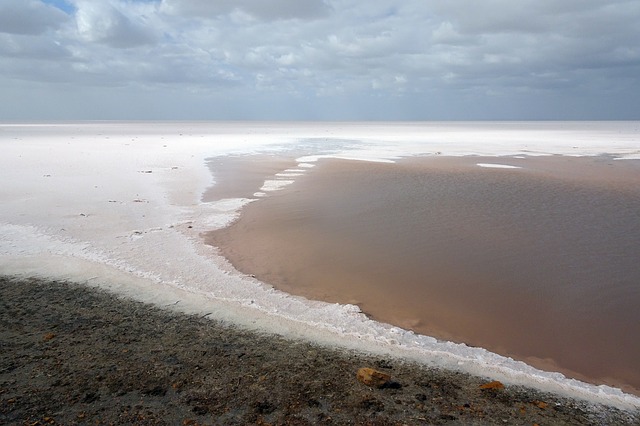
Kutch (also spelled Cutch, Kachh, Kachch, and Kachchh) is a district of Gujarat state in western India. The literal meaning of term Kutch is something which intermittently becomes wet and dry. The term ‘Kutch’ is also used for tortoise in Sanskrit. Kutchi is an Indo-Aryan language mainly spoken in the Kutch region of Gujarat. Kutchi is also known as Cutchi, Kutchhi or Kachchhi and is related to Sindhi and Gujarati.
Kutch is a beautiful amalgamation of the sea and desert that can charm anyone with its beauty. A large part of the Kutch, commonly known as the Great Rann of Kutch, submerges in water during the rainy season and becomes dry during the winter season. The Great Rann of Kutch is a salt marsh in the Thar Desert and is reputed to be one of the largest salt deserts in the world. The Rann Of Kutch is home to a wide array of flora and fauna. Migratory birds deem it an abode during diverse weather conditions. People who want to relish the view of the desert from a different angle should climb the Kalo Dungar (black hill), the highest point in Kutch.
Kutch is also famous for crafts and embroidery works, Flamingo Sanctuary and The Indian Wild Ass Sanctuary. The Indian Wild Ass Sanctuary, the Little Rann of Kutch, where the last of three species of Asiatic wild ass (Equus hemionus khur or khar) still exists along with wolves, foxes, jackals, chinkara gazelles, nilgai antelope and blackbucks as well as 13 species of lark. Bhuj is an ideal starting point to visit the Rann of Kutch. Beautiful beaches of Mandvi near Bhuj are also totally worth visiting during your trip to Kutch. Don’t miss to see the ancient town of Dholavira.
The majority of the population is Hindu and Jain and thus largely vegetarian. Jains also refrain from eating kandmool food grown below the ground such as potatoes, garlic, onion, and yam. There are also a sizeable population of Muslims, who eat vegetables, chicken, mutton and occasionally camels. In the villages, staple foods include kadi-khichdi, bajra and milk ; bajara na rotla with curd and buttermilk is very common food for all the Gujarati people. Dabeli, kutchi dabeli or double roti a popular snack food of India, originating in the Kutch or Kachchh. It is a sweet snack made by mixing boiled potatoes with a special dabeli masala, putting the mixture in a ladi pav (burger bun), and serving it with chutneys made from tamarind, date, garlic, red chilies, etc. It is garnished with pomegranate and roasted peanuts.
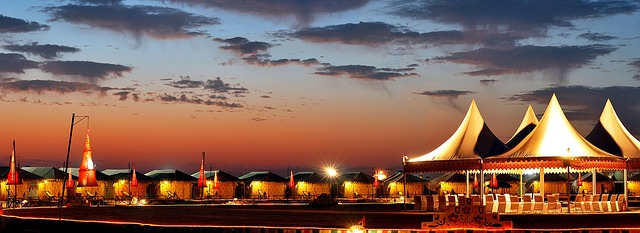
Kutch Mahotsav or the great Kutch festival is organized between October to February usually for three to four months every year near the days when Shivratri is celebrated in Gujarat. There are huge camp settlements with cultural programs, functions and adventure activities like hot-air ballooning. It is a Carnival of Music, Dance, nature beauty of White Rann and much more then that when visit under the full Moon. Kutch Rann Utsav is the shimmering landscape that gives the enchanting moments of this Fest, which feels like as Heaven On Earth during Festival Time.
Kutch Desert Wildlife Sanctuary is situated in the Great Rann of Kutch. It was declared a sanctuary in February 1986. It is the largest Wildlife Sanctuary in India areawise. It is less than 100 km away from Bhuj, this sanctuary is spread over an area of about 7505.22 sq. km. The sanctuary supports wide variety of water birds and mammalian wildlife. The Kutch Desert Wildlife Sanctuary is inhabited by a wide variety of wildanimals like hyenas, foxes, wolves, and chinkaras. Most of the mammals like the Nilgai, Wild Ass and the Black Buck which are seen in the Wild ass Sanctuary are also found here.
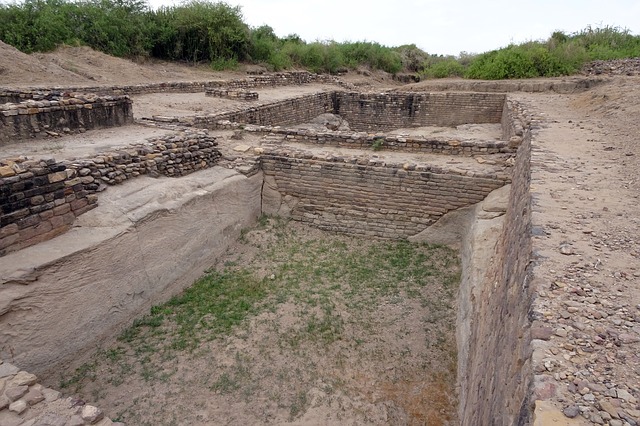
Dholavira, known locally as Kotada (which means large fort), is an archaeological site at Khadirbet in Bhachau Taluka of Kutch District. Dholavira is the larger of the two most remarkable excavations of the Indus Valley Civilization or Harappan culture, dating back to 4500 years ago. The excavation also tells the story of the 7 stages of the civilization, from development to maturity to decay, the last of which hints at a strange piece of history.
Kutch Museum in Bhuj is the oldest museum of Gujarat. It is located opposite Hamirsar Lake in Bhuj, Kutch. The museum boasts of its collection of the extinct Kutchi Script and ancient coins. Tribal artifacts are also a part of the museum along with many other kinds of objects on display exhibits of embroidery, paintings, arms, musical instruments, sculpture and precious metalwork.
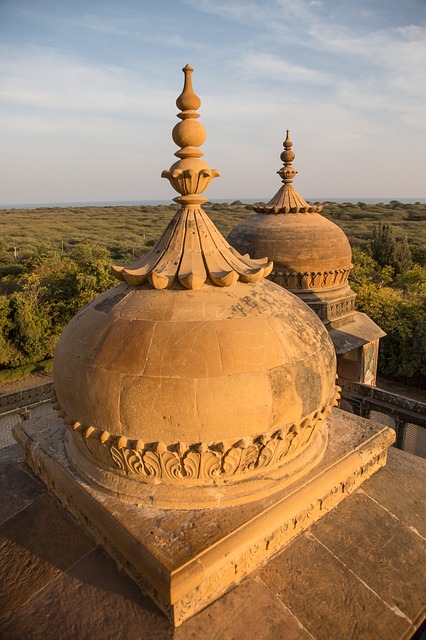
Mandvi beach is loacted about 60 kms from Bhuj, in the historical port city of Mandvi. It used to be an important location on the spice trade route as well as the desert caravan route in the ancient times. The famous snack ‘dabeli’ is said to have been invented in Mandvi. The town has a quintessential Kutchi culture and has several excursions for visitors. Mandvi beach resort at Vijay Vilas palace is a breathtaking experience.
Gleaming, glowing and shimmering, the Aina Mahal or ‘Hall of Mirrors’ in Bhuj is one of the finest examples of Indo-Saracenic architecture constructed ever in India. The Aina Mahal is an 18th-century palace that is located next to the Prag Mahal in Darbargadh, Bhuj. The palace was built by Rao Lakhpatji of Cutch State around 1750.
Narayan Sarovar, one of the holiest lakes of Hindus, is sacred to Lord Narayan, an incarnation of Lord Vishnu. Located 100 km away from Bhuj, the lake is an agglomeration of five lakes (collectively called Panch-Sarovar; Mansarovar, Bindu Sarovar, Narayan Sarovar, Pampa Sarovar and Pushkar Sarovar) and is considered a sacred pilgrimage destination for the orthodox Hindus. According to the Hindu mythology, the lake was formed when the foot of Lord Vishnu touched the land at a particular place and water spurted from there giving it the shape of a pious. A large number of temples like Shri Trikamraiji, Laxminarayan, Govardhannathji, Dwarkanath, Adinarayan, Ranchodraiji and Laxmiji, constructed by Maharaj Deshalji’s queen surround the lake.
The giant Prag Mahal is Located in the same compound as the Aaina Mahal. The beautiful Prag Mahal is built in 1860’s by the great designer Colonel Henry Saint Wilkins in the Italian Gothic style and was commissioned by the then ruler, Pragmali II. It was a joint contribution of the Indian artisans as well as the foreign workers. The opulent Mahal has the second tallest clock tower in the country which offers an amazing view from the top. A part of the palace has been converted into a museum with archives and personal items of the royal family on display. Prag Mahal has also been very famous in Bollywood and has been a part of several Bollywood blockbusters including Lagaan, Hum Dil De Chuke Sanam, and numerous Gujarati films as well.
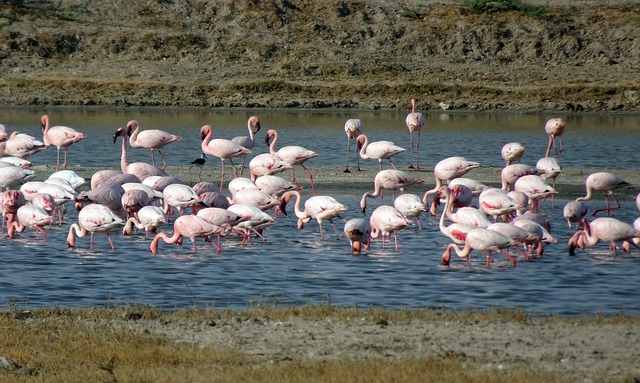
Kutch Bustard Sanctuary also known locally as the Lala Prajan Sanctuary primarily aims to conserve the Great Indian Bustard. One has the best possibility and chances of spotting India’s heaviest bird, great Indian bustard here. The sanctuary covers an area of just over 2 sq. km, but still houses some of the excellent species including harriers, common cranes, black partridges, sand grouses, Black and Grey Francolin, Spotted and Indian Sandgrouse, quails, larks, shrikes, coursers, plover, Imperial Eagle, flamingos, herons, egrets, sandpipers, etc. Some other wild animals which are present here are wolf, caracal, desert cat, jackal, striped hyena, fox, mongoose, bluebull, chinkara, spiny tailed lizard and various types of snakes.
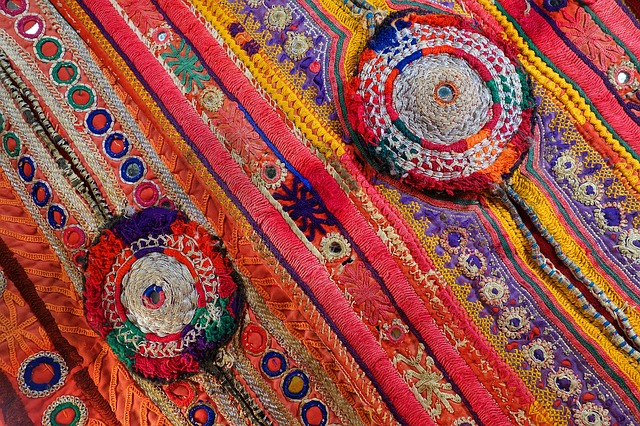
Kutch possesses a very rich culture having varieties of embroideries, mirror work, handwork, bandhani work etc. The people of Kutch are skilled in a variety of crafts, thus enriching their markets with rare products. One can buy Gold Jewellery, Copper Bells,Pottery, Bandhani sarees, cloth material, Patchwork fabric, bedsheets etc. You can visit the famous art villages in the Kutch district. You can visit villages like Bhujodi, Dhamkada, Nirona and Bhachau. The young artisans of these villages have put on display their artworks in the UNESCO exhibitions, and some of them have won National awards for their work. There are also many emporiums and exhibitions that offer the handicrafts of the district.
During Winters the full moon nights as the reflection of the moonlight on the white sand turns the place into an absolute paradise, thus Winters (November-Feb) are the best time to visit Kutch, The Rann Festival is also organised during the same time, and that increases the scope for a lot of activities in and around the region. Summers should be avoided as temperatures can go as high as 45 degree celcius.
One can easily travel to Kutch by opting any of the following means of transport:
By train
- Kutch Express (Daily) and Sayaji Nagri Express (Daily) from Mumbai via Surat, Ahmedabad and Gandhidham to Bhuj.
- Ala Hazrat Express(Daily) from Delhi via Jaipur, Ajmer and Palanpur to Bhuj.
By bus
State transport and private buses available for Mumbai, Ahmedabad, Rajkot, Bhavnagar, Jamnagar and Jodhpur.
By plane
Air Deccan flies daily to Mumbai from Kandla Airport near Gandhidham town.
 TRAVEL TRENDS